Azalea George Taber
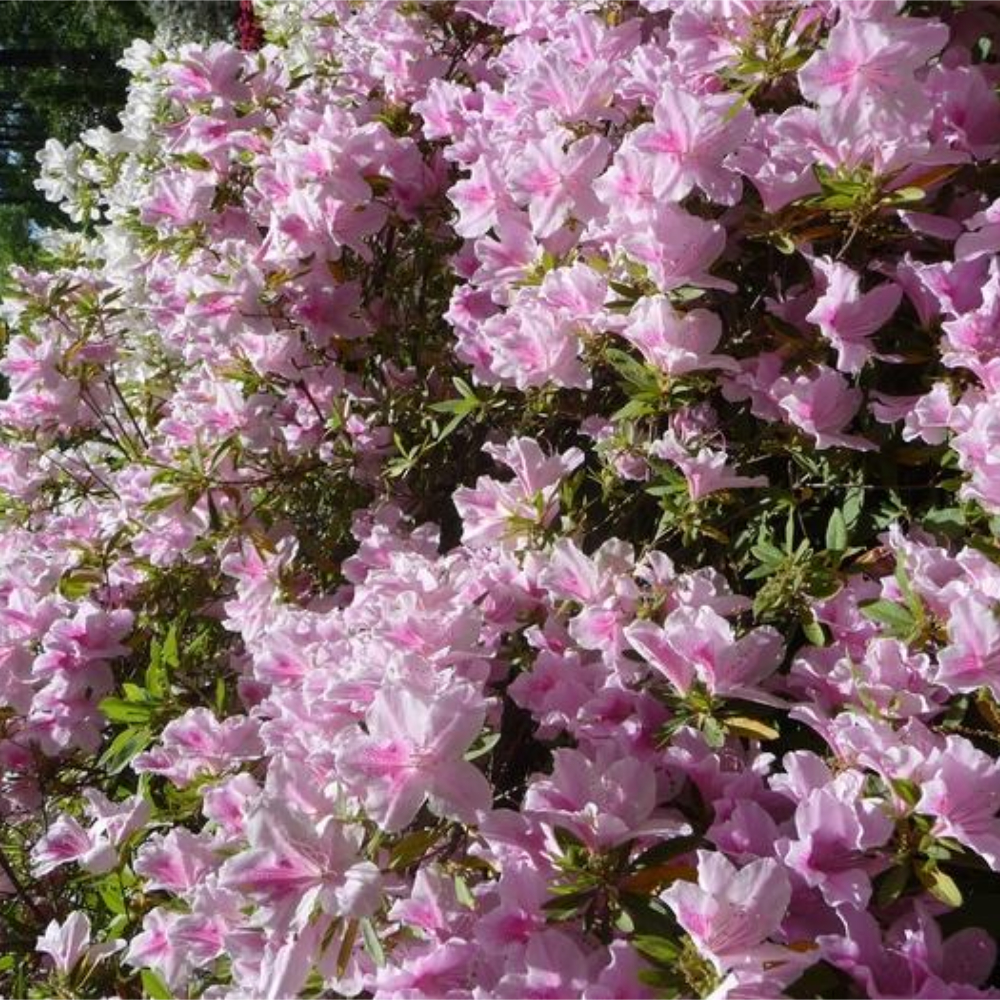
Rhododendron indica 'George L. Taber'The Azalea George Taber is a beautiful, deciduous azalea variety that features striking white flowers with delicate pink edges, offering a sophisticated touch to any garden. Blooming profusely in early to mid-spring, the flowers create a stunning display that contrasts beautifully with the plant’s dark green foliage. This hardy shrub is perfect for adding elegance to foundation plantings, mixed borders, or even as a specimen plant in your garden.
Reaching about 3 to 4 feet in height and width, the George Taber has a rounded, dense growth habit, making it ideal for hedges or as a backdrop to other plants. Its vibrant blooms provide a burst of spring color, while the glossy leaves continue to provide visual appeal after flowering. Easy to grow and maintain, this azalea variety is a wonderful choice for gardeners looking for low-maintenance beauty with lasting impact.
Care Instructions:
Planting: Choose a location with partial to full sunlight. The Azalea George Taber prefers slightly acidic, well-drained soil. Dig a hole that’s twice the size of the root ball, and plant it at the same depth as it was in the pot. Add mulch around the base to retain moisture and control weeds.
Watering: Keep the soil consistently moist, especially during dry spells. Water deeply to ensure the roots receive sufficient moisture. Avoid over-watering, as this can lead to root rot. In winter, reduce watering as the plant enters dormancy.
Pruning: Prune right after blooming to encourage new growth and more flowers. Remove any dead or damaged branches, and trim lightly to maintain its compact, rounded shape.
Pest: Control: Regularly inspect for pests like aphids, lace bugs, and spider mites. If you detect any, treat the plant with insecticidal soap or neem oil to prevent infestations.
Soil Tips: Azaleas thrive in acidic soils (pH between 5.5 and 6.0). If your soil is alkaline, amend it with organic materials like peat moss or pine bark to help lower the pH. Ensure proper drainage to avoid root rot, as azaleas are sensitive to waterlogged conditions.