Common Buttonbush
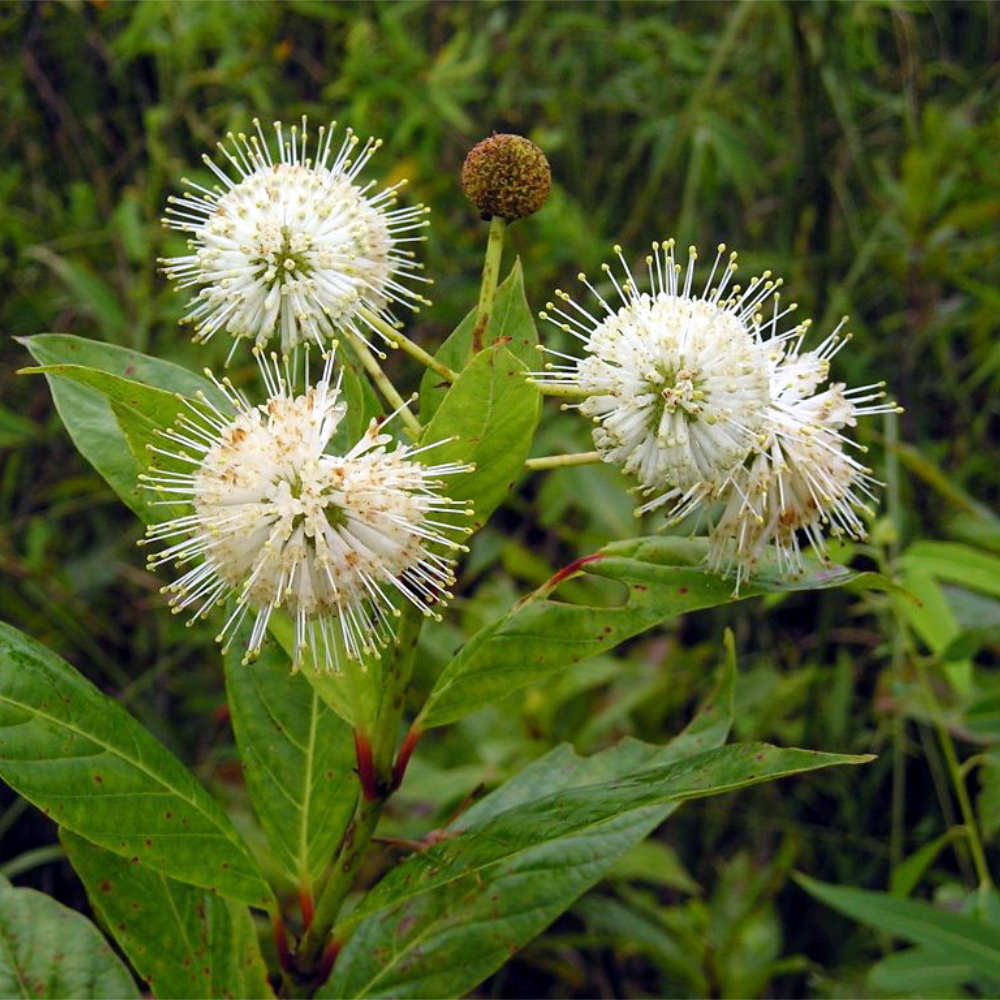
Cephalanthus occidentalisThe Buttonbush (Cephalanthus occidentalis) is a stunning native shrub beloved for its distinctive, globe-shaped white flower clusters that bloom in summer. Each flower head resembles a pin cushion, attracting butterflies, bees, and hummingbirds with its sweet nectar. Growing 5–12 feet tall, Buttonbush is perfect for naturalized areas, rain gardens, and pond edges, where it thrives in consistently moist to wet soils.
A member of the coffee family, Buttonbush adds texture and visual interest with its glossy green foliage that turns yellow in fall. Its unique flowers mature into attractive, button-like seed balls that persist into winter, providing food for birds and seasonal interest. Buttonbush not only beautifies the landscape but also supports local ecosystems by offering valuable habitat and nourishment for pollinators and wildlife.
Care Instructions
Planting:
Plant in full sun to partial shade. Ideal for low-lying or wet areas, including along ponds, streams, or rain gardens. Best planted in spring or fall.
Watering:
Keep soil consistently moist, especially during establishment. This shrub tolerates wet conditions and occasional flooding.
Pruning:
Prune in late winter or early spring to shape or remove dead wood. Buttonbush responds well to rejuvenation pruning.
Pest Control:
Generally pest and disease resistant. Monitor for leaf spot or mildew in overly humid conditions.
Soil Tips:
Prefers moist, rich, loamy soil but tolerates clay. Avoid dry or sandy soils. Add compost to improve fertility and structure.