Cherry Weeping Pink
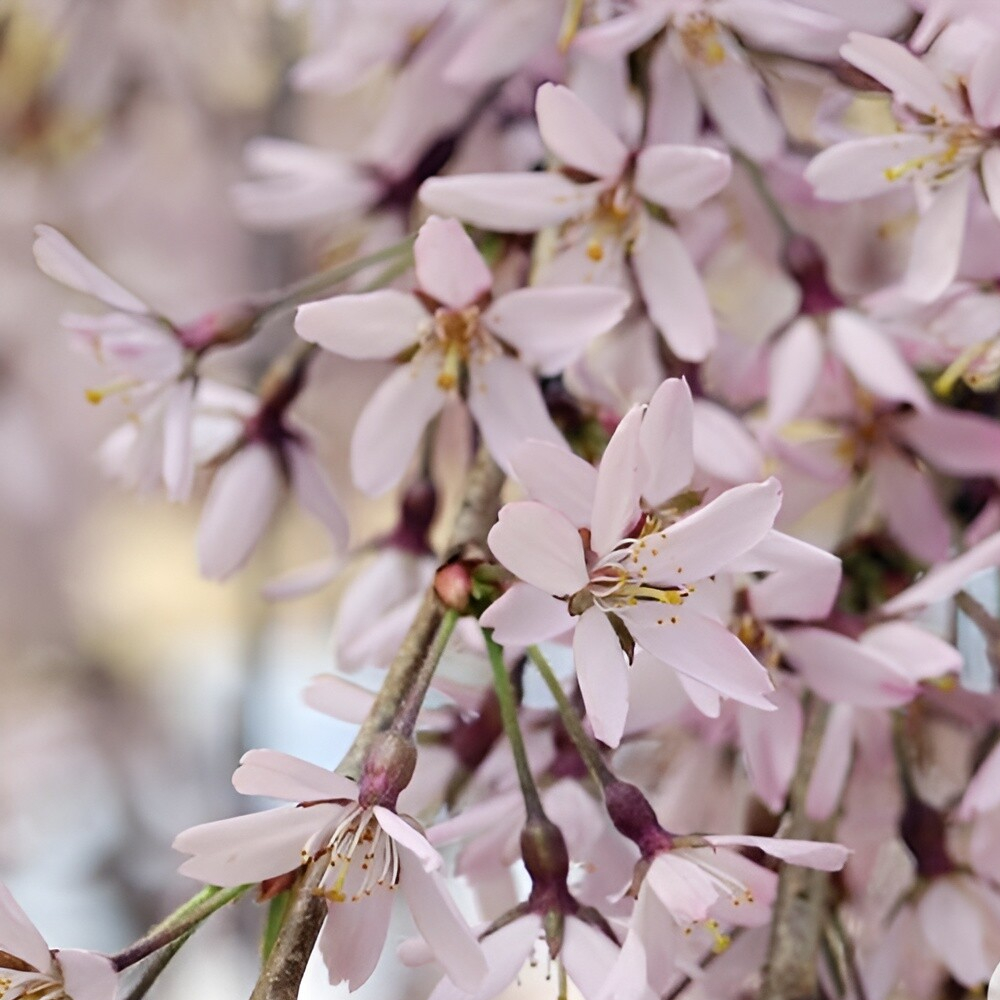
Prunus pendula 'Pink'The Cherry Weeping Pink (Prunus pendula ‘Pink’) is a striking ornamental tree known for its graceful weeping branches and delicate pink flowers that bloom in early spring. The cascading clusters of soft pink blossoms create a gentle, ethereal effect, making it a captivating focal point in any garden or landscape. Its elegant weeping habit, combined with the vibrant color of the flowers, adds visual interest and charm to smaller gardens, courtyards, or as a specimen tree in larger spaces.
Reaching a height of 15-25 feet with a similar spread, the Cherry Weeping Pink offers beauty in every season. After its spring bloom, the tree produces lush green foliage in summer, which transitions to a golden yellow or orange hue in the fall. Hardy in USDA zones 5-9, it thrives in a variety of climates, making it an easy-care addition to gardens. This tree’s unique form and year-round beauty make it an excellent choice for anyone looking to add elegance and color to their landscape.
Care Instructions
Planting:
Select a location with full sun to encourage optimal blooming. The Cherry Weeping Pink prefers well-drained, fertile soil. Dig a hole twice the size of the root ball and position the tree at the same depth it was in the container. Water thoroughly after planting.
Watering:
Water deeply during the first growing season to establish strong roots. Once established, the tree is moderately drought-tolerant but benefits from regular watering, especially during dry spells. Be sure the soil drains well, as the tree does not tolerate standing water.
Pruning:
Prune the tree immediately after flowering to remove any dead or damaged wood. Light pruning will help maintain the tree’s graceful shape and improve air circulation. Avoid heavy pruning, which may remove next year’s flower buds.
Pest Control:
The Cherry Weeping Pink is relatively pest-resistant, but you may occasionally encounter aphids, scale insects, or caterpillars. Inspect the tree regularly and treat any infestations with insecticidal soap or neem oil. Be vigilant for fungal diseases like cherry leaf spot and remove infected leaves promptly.
Soil Tips:
This tree thrives in slightly acidic to neutral, well-drained soil. While it performs best in loamy, fertile soil, it can adapt to a variety of soil types, provided they are not overly compacted. Avoid heavy clay soils, as poor drainage can lead to root rot and other issues.