American Elderberry
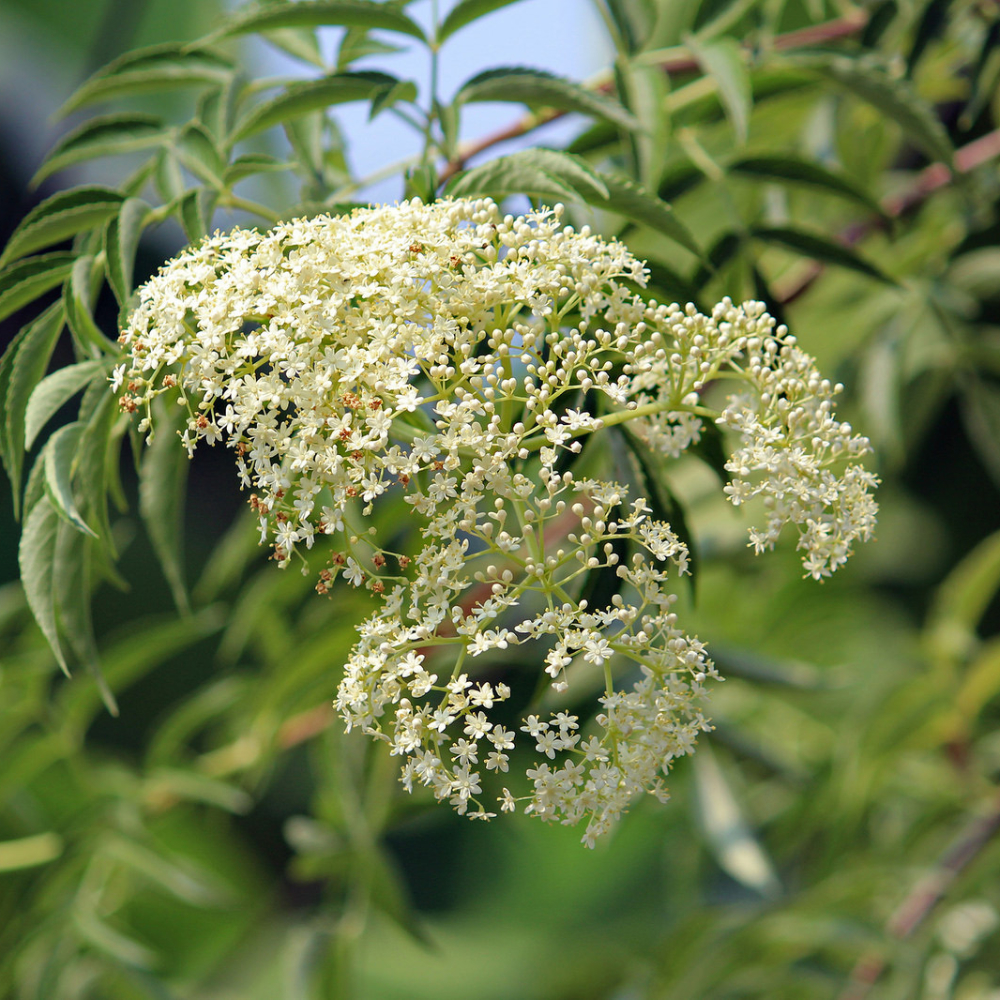
Sambucus canadensisElderberry is a fast-growing deciduous shrub cherished for both its ornamental value and its delicious, nutrient-rich berries. In late spring to early summer, it produces large, creamy white flower clusters that attract pollinators and add airy texture to the landscape. These blossoms mature into deep purple to black berries that can be harvested for jams, syrups, wines, and wellness uses. Elderberry shrubs feature graceful, arching branches and lush green foliage, making them attractive additions to edible gardens, naturalized areas, and mixed borders.
This versatile shrub thrives in a variety of climates and soil conditions, offering exceptional resilience and dependable performance. It grows best in full sun to partial shade and tolerates both moist soils and occasional drought once well-established. Its berries are beloved by birds, making it an excellent choice for wildlife-friendly landscapes. Whether grown for ornamental appeal, fruit production, or ecological benefits, Elderberry is a beautiful and practical addition to any garden.
Care Instructions:
Planting: Choose full sun to partial shade. Plant in moist, well-drained soil, spacing shrubs 6–10 feet apart for proper air circulation and berry production.
Watering: Water regularly during the first year. Once established, maintain moderate moisture for the best fruit yield.
Pruning: Prune in late winter to remove older stems and encourage new, fruit-producing growth. Thin the center for airflow.
Pest Control: Generally low-maintenance; watch for aphids, borers, or leaf spot. Use neem oil or insecticidal soap if needed.
Soil Tips: Prefers fertile, slightly acidic to neutral soil. Add compost annually to support vigorous growth and berry production.