Common Winterberry
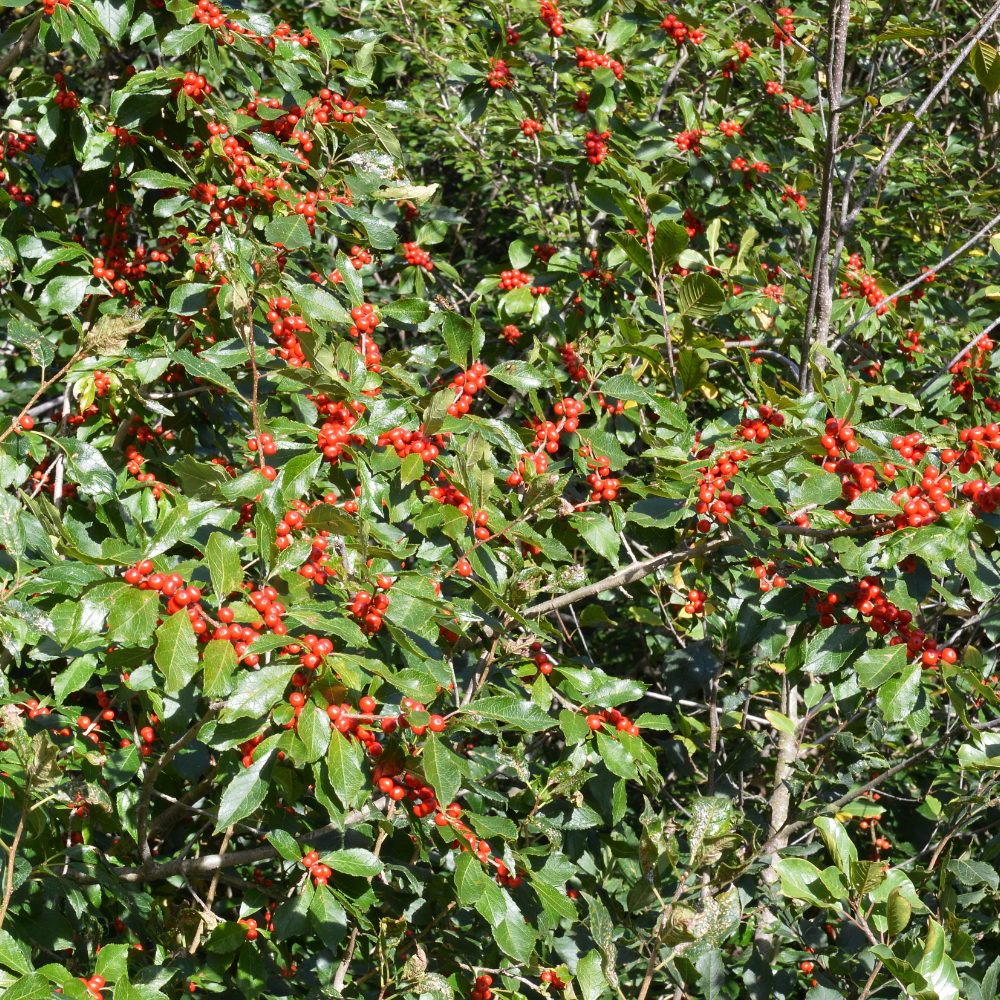
Ilex verticillataWinterberry Holly (Ilex verticillata) is a striking deciduous shrub known for its clusters of brilliant red berries that illuminate winter landscapes. Unlike evergreen hollies, this plant drops its leaves in fall, allowing its vibrant berries to take center stage. Native to North America, Winterberry is highly adaptable and thrives in wet or boggy areas where many other shrubs struggle. Its compact form, glossy green foliage, and showy fruit make it a favorite among gardeners seeking bold seasonal color.
This holly variety is also an excellent wildlife plant. Birds and small mammals are drawn to its berries, providing natural interest through the colder months. Winterberry Holly works beautifully in group plantings, borders, rain gardens, and naturalized settings. With male and female plants required for fruit production, planting the right pair ensures a spectacular berry display year after year. Hardy, reliable, and visually stunning, Winterberry Holly is a standout addition to any winter landscape.
Care Instructions
Planting
Plant in early spring or fall. Choose a sunny to partially shaded location, and remember to plant at least one male pollinator shrub nearby for berry formation.
Watering
Keep soil consistently moist, especially during the first growing season. Winterberry tolerates wet sites and can thrive in rain gardens.
Pruning
Prune in late winter or early spring to shape the plant and remove damaged or crossing branches.
Pest Control
Generally resistant to major pests; monitor for leaf miners or scale insects and treat with horticultural oil if needed.
Soil Tips
Prefers acidic, moist, well-drained soils but adapts to clay and wet environments. Mulch to retain moisture and regulate soil temperature.