Coral Honeysuckle
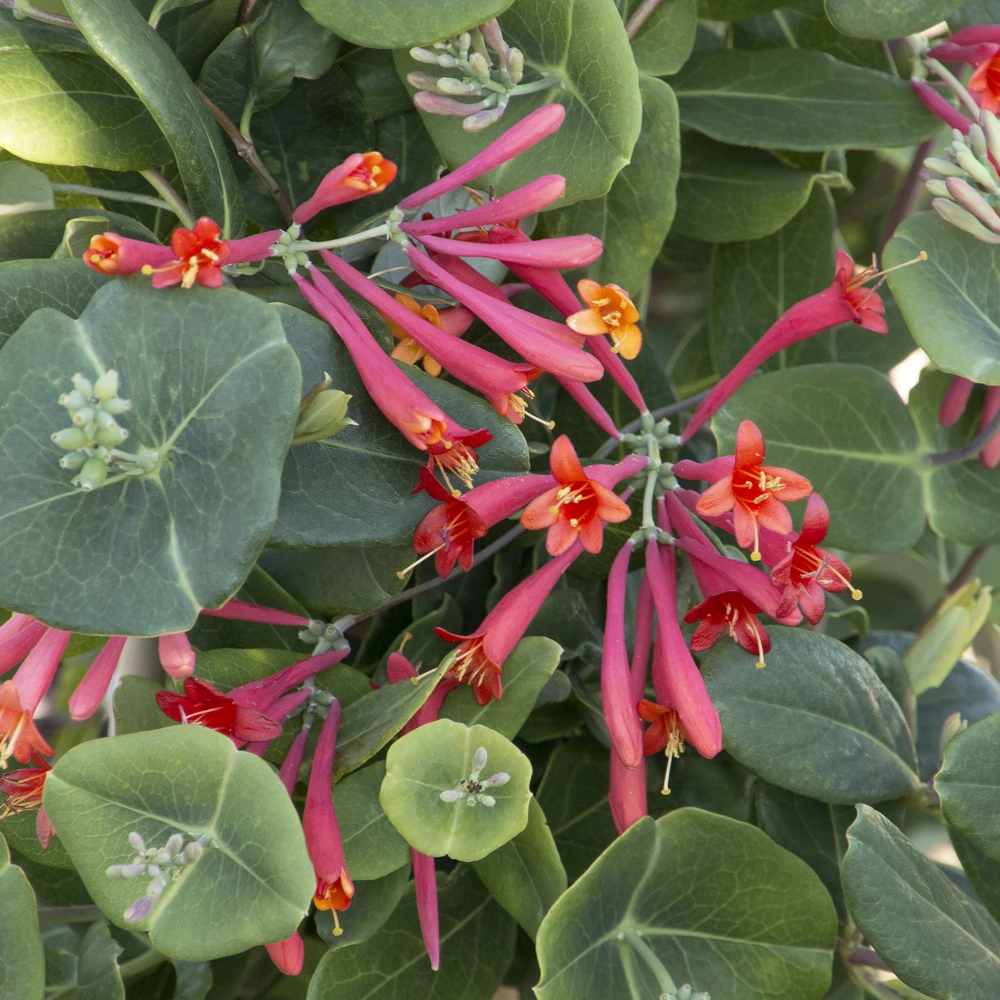
Lonicera sempervirensCoral Honeysuckle (Lonicera sempervirens) is a beloved native vine prized for its clusters of trumpet-shaped, coral-red flowers that appear from spring through fall. Unlike invasive honeysuckle varieties, this species is well-behaved and supports pollinators rather than overwhelming nearby plants. Its semi-evergreen foliage provides year-round appeal in warmer climates, while its blooms offer a continuous nectar source for hummingbirds, butterflies, and other beneficial wildlife. With a twining growth habit, it easily climbs trellises, mailboxes, pergolas, or fences, creating a striking vertical display of color and texture.
This hardy vine thrives in a wide range of conditions and brings both ornamental beauty and ecological benefits to the garden. Coral Honeysuckle is especially valued for its adaptability, tolerant of heat, humidity, and a variety of soil types. Even in winter, its slender stems provide structural interest, making it a multi-season standout. Whether used as a feature on a garden structure or planted to naturalize along woodland edges, Coral Honeysuckle delivers charm, resilience, and reliable blooms that brighten any space.
Care Instructions
Planting
Plant in full sun for the best flowering, though it will tolerate partial shade. Provide a support structure such as a trellis or fence for climbing.
Watering
Water regularly during the first year to establish strong roots. Once established, Coral Honeysuckle is moderately drought-tolerant.
Pruning
Prune after the main flowering flush to maintain shape and encourage new growth. Remove older, woody stems as needed.
Pest Control
Generally pest-resistant, but aphids or leafminers may appear occasionally. Treat with insecticidal soap or neem oil if necessary.
Soil Tips
Thrives in well-drained, moderately fertile soil. It adapts to clay, loam, or sandy soils and benefits from a light layer of compost each spring.