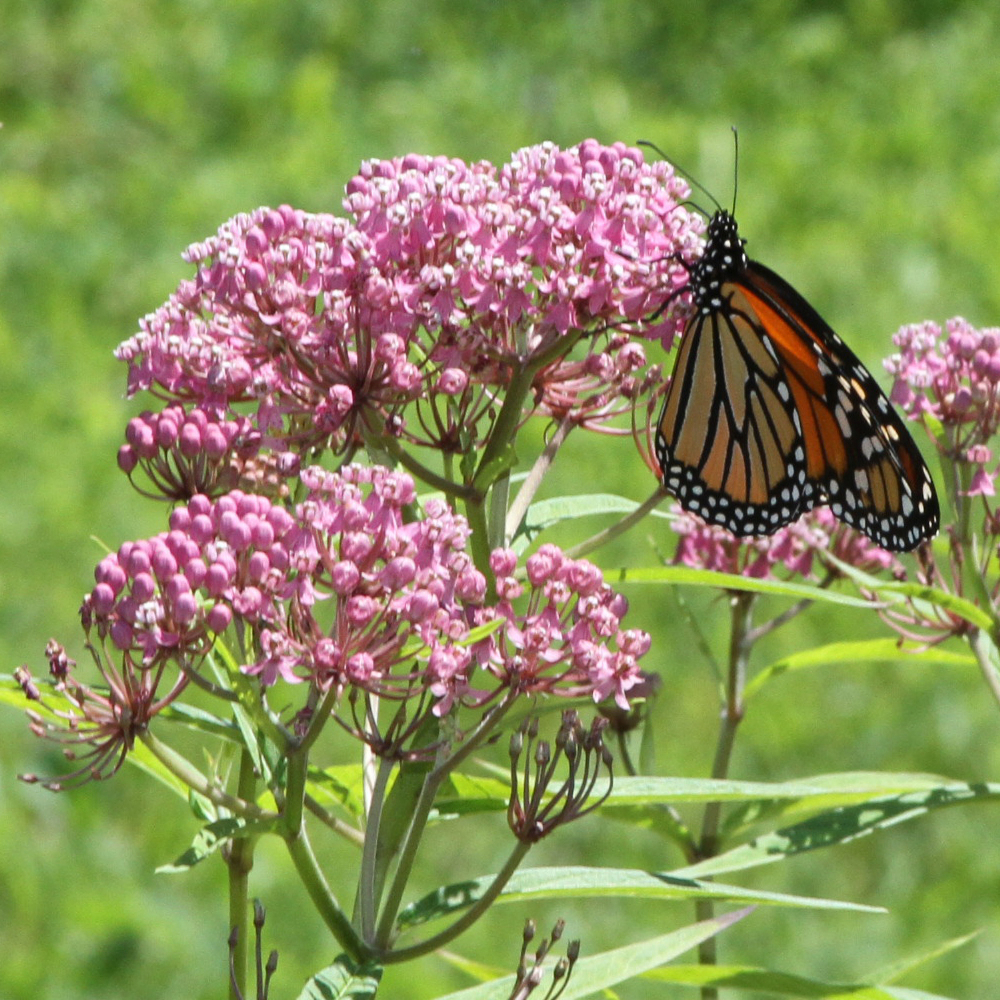
Milkweed
Asclepias incarnataMilkweed is a highly valued native perennial best known for its critical role in supporting monarch butterflies. Its fragrant, clustered flowers bloom from late spring through summer in shades of pink, orange, white, or purple, depending on the species. The broad, sturdy foliage serves as the primary host plant for monarch caterpillars, while the nectar-rich blooms attract bees, butterflies, and other beneficial insects. Milkweed adds natural beauty and ecological purpose to garden beds, meadows, and restoration landscapes.
In addition to its environmental importance, Milkweed is a hardy and adaptable plant. Once established, it thrives in a range of soil types and growing conditions, from dry prairies to moist garden beds. Its deep root system helps improve soil structure and provides excellent drought tolerance. Milkweed’s low-maintenance nature and long-lasting blooms make it an ideal choice for gardeners seeking to create sustainable, wildlife-friendly spaces without sacrificing visual appeal.
Care Instructions:
Planting:
Plant in full sun to partial shade. Space plants 45–60 cm apart, allowing room for natural spreading.
Watering:
Water regularly during establishment. Mature plants are drought-tolerant but perform best with occasional deep watering.
Pruning:
Leave stems standing through winter for wildlife. Cut back in early spring before new growth emerges.
Pest Control:
Expect caterpillars, this is normal and beneficial. Manage aphids with gentle sprays of water or insecticidal soap if needed.
Soil Tips:
Adaptable to many soil types. Well-draining soil is preferred, though some species tolerate moist conditions.