Pear 'Pineapple'
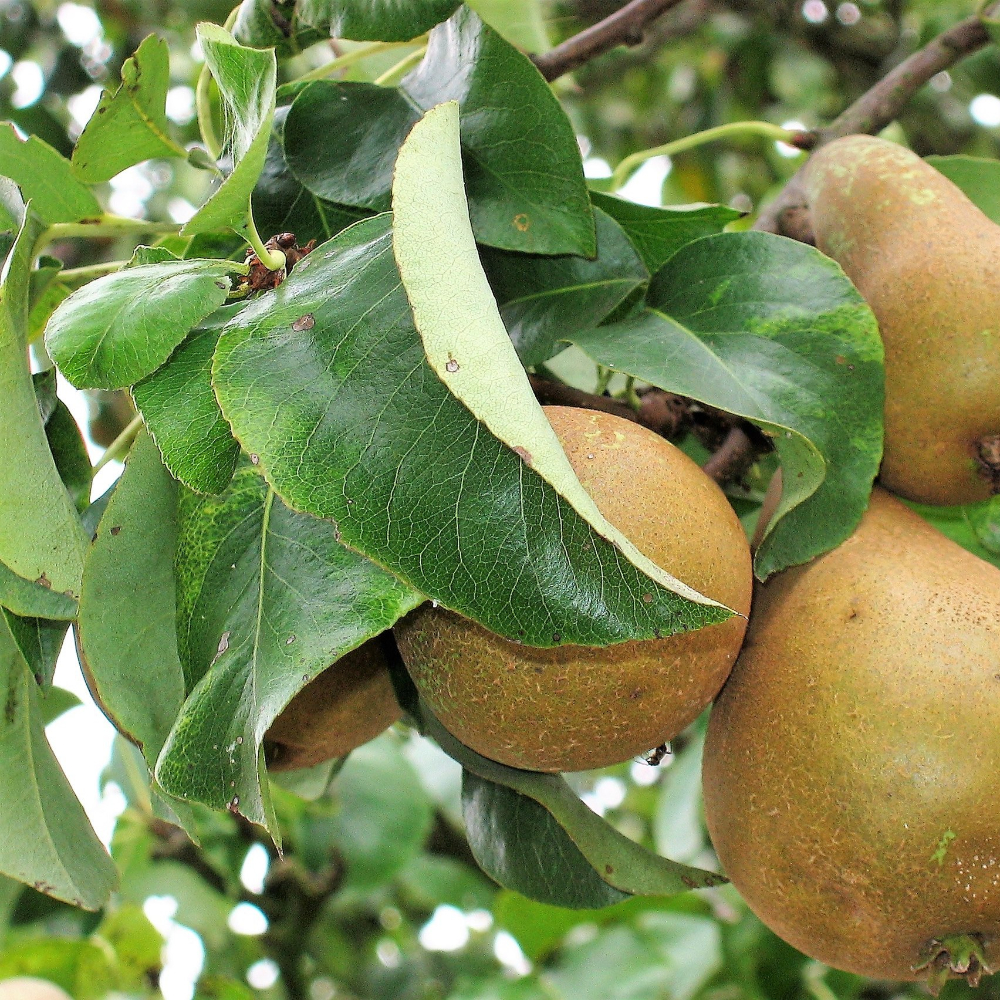
Pyrus CommunisThe Pear ‘Pineapple’ (Pyrus communis x Pyrus pyrifolia) is a distinctive Southern favorite, offering firm, crisp fruit with a mild sweetness and a subtle tropical tang reminiscent of pineapple. This unusual flavor profile makes it ideal for fresh eating, baking, canning, and preserves. The fruit has yellow-green skin with a red blush and ripens mid to late summer.
Hardy, self-pollinating, and exceptionally tolerant of heat and humidity, the Pineapple pear is an excellent choice for Southern and warmer USDA Zones (5–9). Its low chill hour requirement (about 150–200 hours) makes it especially suitable for areas with mild winters. While self-fertile, planting with another pear variety can increase yield.
The tree is highly vigorous and disease-resistant, particularly to fire blight—a common issue in pear cultivation. With its showy white blossoms in spring, lush green foliage, and reliable productivity, the Pineapple pear is as attractive as it is useful. It’s a great choice for home orchards, edible landscapes, and permaculture gardens.
Care Instructions
Planting:
Choose full sun and well-drained soil. Space trees 15–20 feet apart. Ideal for Southern gardens. Add compost at planting.
Watering:
Water deeply once a week. Keep soil evenly moist, especially during fruit development and dry spells.
Pruning:
Prune in winter to remove dead or crossing branches and improve airflow. Maintain open canopy for light penetration.
Pest Control:
Resistant to fire blight. Watch for aphids, scale, and leaf spot. Use neem oil or horticultural soap as needed.
Soil Tips:
Prefers loamy, slightly acidic to neutral soil (pH 6.0–7.0). Mulch annually and enrich with organic matter for best results.