Persimmon 'American'
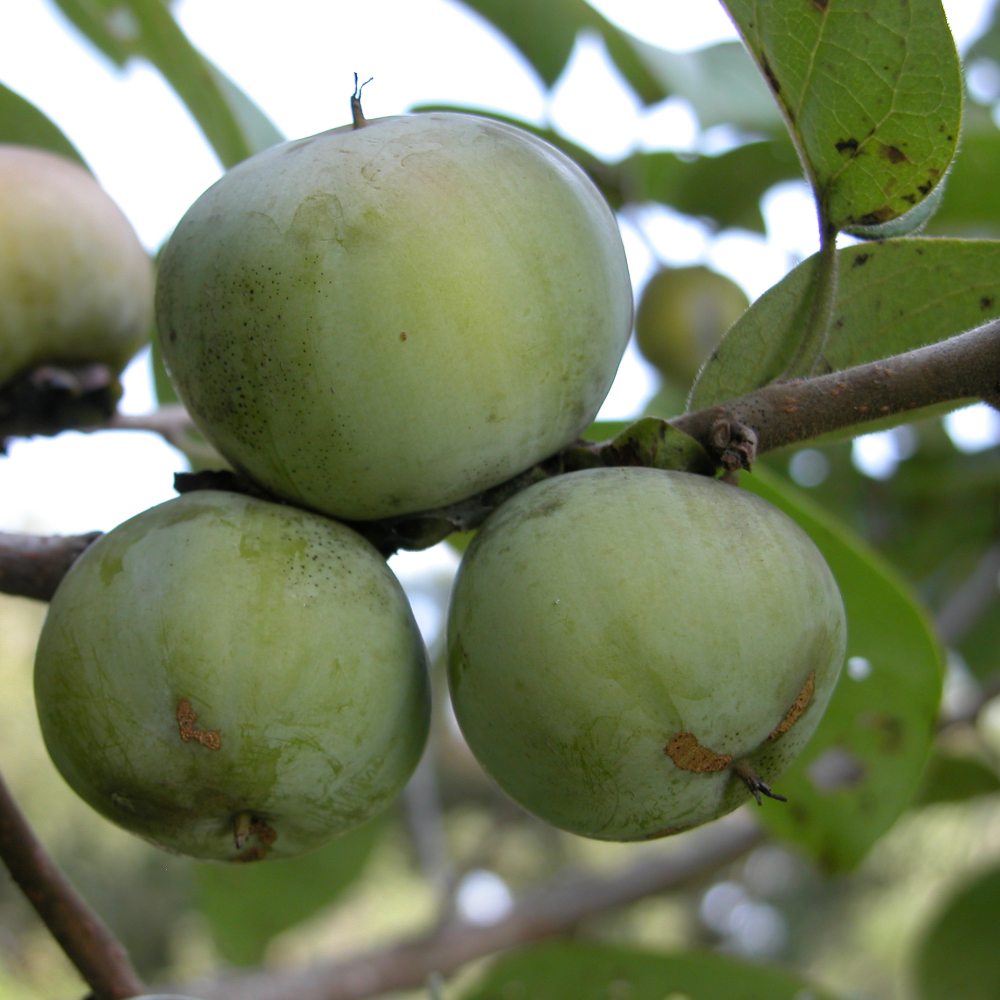
Diospyros VirginianaThe American Persimmon (Diospyros virginiana) is a native fruit tree known for its resilience, ornamental beauty, and rich, sweet fruit. Producing small to medium-sized, orange fruits that ripen in fall, the American Persimmon has a distinct honey-sweet flavor when fully ripe. The fruit is often used in puddings, jams, and baked goods and can be dried or eaten fresh off the tree—once softened.
This tree is dioecious, meaning male and female flowers grow on separate trees. To produce fruit, you’ll need at least one male for every 6–8 female trees unless you plant a self-fertile cultivar. Hardy in USDA Zones 4–9, it tolerates a wide range of soil types and climates, making it ideal for both rural and urban landscapes. In addition to edible fruit, the tree also offers attractive bark, glossy green leaves, and vibrant fall color—making it a four-season ornamental addition to any yard.
The American Persimmon is a great choice for naturalized or native plant gardens and supports wildlife with its fruit and habitat benefits.
Care Instructions
Planting:
Plant in full sun for best fruiting. Tolerates clay, loam, or sandy soil. Space trees 20–25 feet apart. Ensure male and female trees are nearby.
Watering:
Water young trees regularly during the first 2–3 years. Mature trees are drought-tolerant but benefit from deep watering during dry spells.
Pruning:
Prune in late winter to remove suckers and dead wood. Light structural pruning helps improve form and airflow.
Pest Control:
Generally pest-resistant. Watch for scale, leaf spot, and webworms. Apply neem oil or horticultural soap if needed.
Soil Tips:
Adaptable to most soils but prefers well-drained, slightly acidic to neutral soil (pH 6.0–7.5). Mulch annually to retain moisture and enrich soil.