Palm Pindo
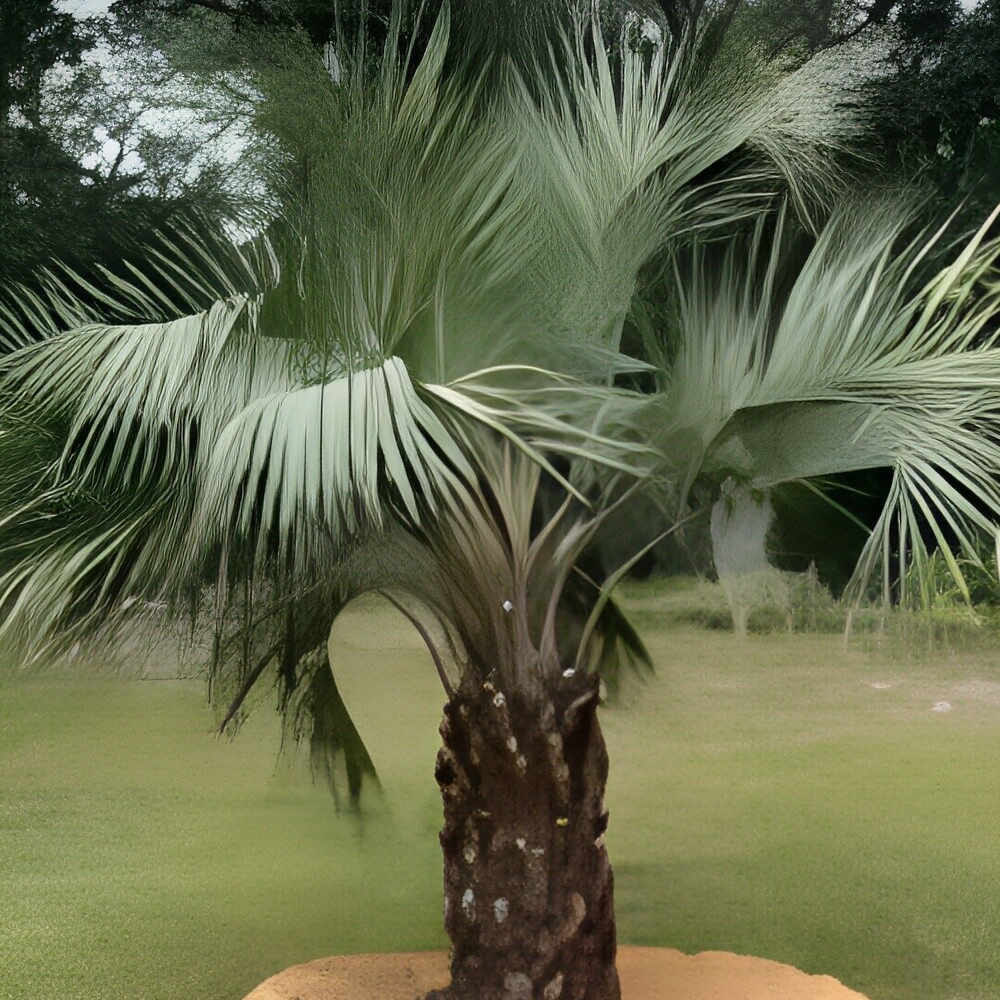
Butia capitataThe Pindo Palm, scientifically named Butia capitata and commonly called Jelly Palm, is a striking, cold-hardy palm native to South America. Renowned for its graceful, arching fronds and slow, manageable growth, the Pindo Palm typically reaches heights of 12–20 feet, making it ideal for small to medium-sized gardens or container planting. In addition to its ornamental beauty, it produces sweet, orange-yellow fruits that can be eaten raw or used to make jelly, giving this palm both aesthetic and culinary value.
This palm thrives in full sun but tolerates partial shade and is highly adaptable to a variety of soil types, including sandy, loamy, and slightly clayey soils. It is remarkably cold-tolerant, surviving temperatures down to 15°F (-9°C), which makes it one of the hardiest palms suitable for northern subtropical regions. Pindo Palms are relatively low-maintenance, drought-tolerant once established, and resistant to most pests, making them a favorite for landscape designers and home gardeners seeking both functionality and beauty. Their slow growth and compact form also make them perfect for lining pathways, patios, or serving as a focal point in a garden.
Care Instructions:
Planting: Select well-draining soil and a sunny location. Space at least 10–15 feet apart for multiple palms.
Watering: Water deeply during the first year; once established, it tolerates occasional drought.
Pruning: Remove only dead or damaged fronds to maintain aesthetics; avoid over-pruning.
Pest Control: Monitor for scale, mites, or palm weevils; treat infestations promptly with horticultural oil.
Soil Tips: Prefers sandy or loamy soil; amend heavy clay for proper drainage to prevent root rot.