Red Buckeye
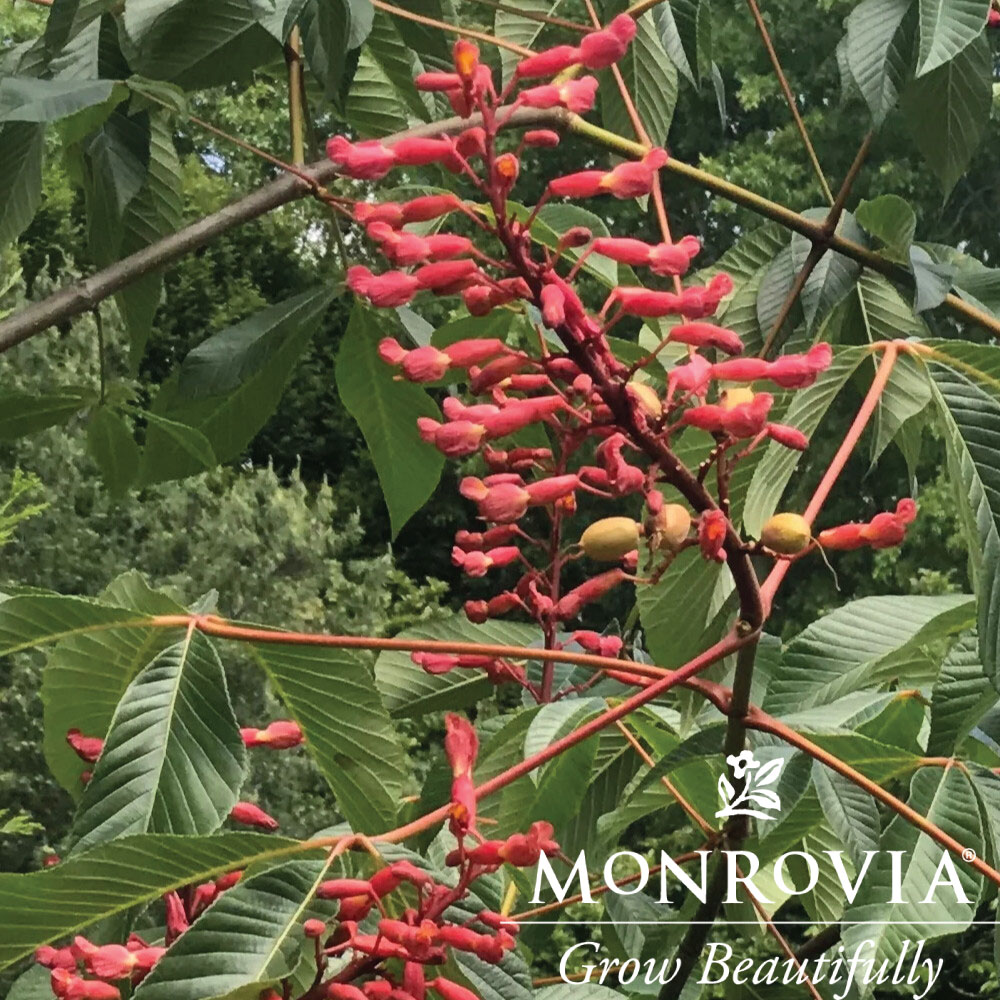
Aesculus paviaRed Buckeye (Aesculus pavia) is a striking native tree or large shrub known for its vibrant red spring flowers and wildlife value. In early to mid-spring, upright clusters of tubular red blooms appear at the branch tips, creating a dramatic display that is especially attractive to hummingbirds and other pollinators. Its glossy, dark green palmate leaves provide a lush, tropical appearance through the growing season, adding texture and visual interest to gardens and woodland settings. Typically growing 15–25 feet tall with a rounded form, Red Buckeye is well-suited for understory plantings, specimen use, or naturalized landscapes.
Native to the southeastern United States, Red Buckeye thrives in partial shade but can tolerate full sun with adequate moisture. It adapts to a variety of soil types as long as drainage is good. In late summer, the tree may go semi-dormant, occasionally shedding leaves early during dry conditions—an adaptive trait rather than a health concern. With its bold flowers, manageable size, and ecological benefits, Red Buckeye is an excellent choice for gardeners seeking a native ornamental tree that supports wildlife and provides seasonal interest.
Care Instructions:
Planting: Select a location with partial shade to full sun and well-draining soil. Dig a hole twice as wide as the root ball and plant at the same depth as in the container. Space plants 12–20 feet apart.
Watering: Water consistently during the first growing season to establish roots. Once established, provide supplemental watering during prolonged dry periods, especially in full sun.
Pruning: Minimal pruning needed. Remove dead or damaged branches in late winter or early spring. Avoid heavy pruning.
Pest Control: Generally pest-resistant. Monitor for leaf blotch or scale insects. Treat problems with horticultural oil or fungicide if necessary.
Soil Tips: Prefers slightly acidic to neutral soil with good drainage. Mulch around the base to retain moisture and protect roots from temperature extremes.