Redbud Carolina Sweetheart
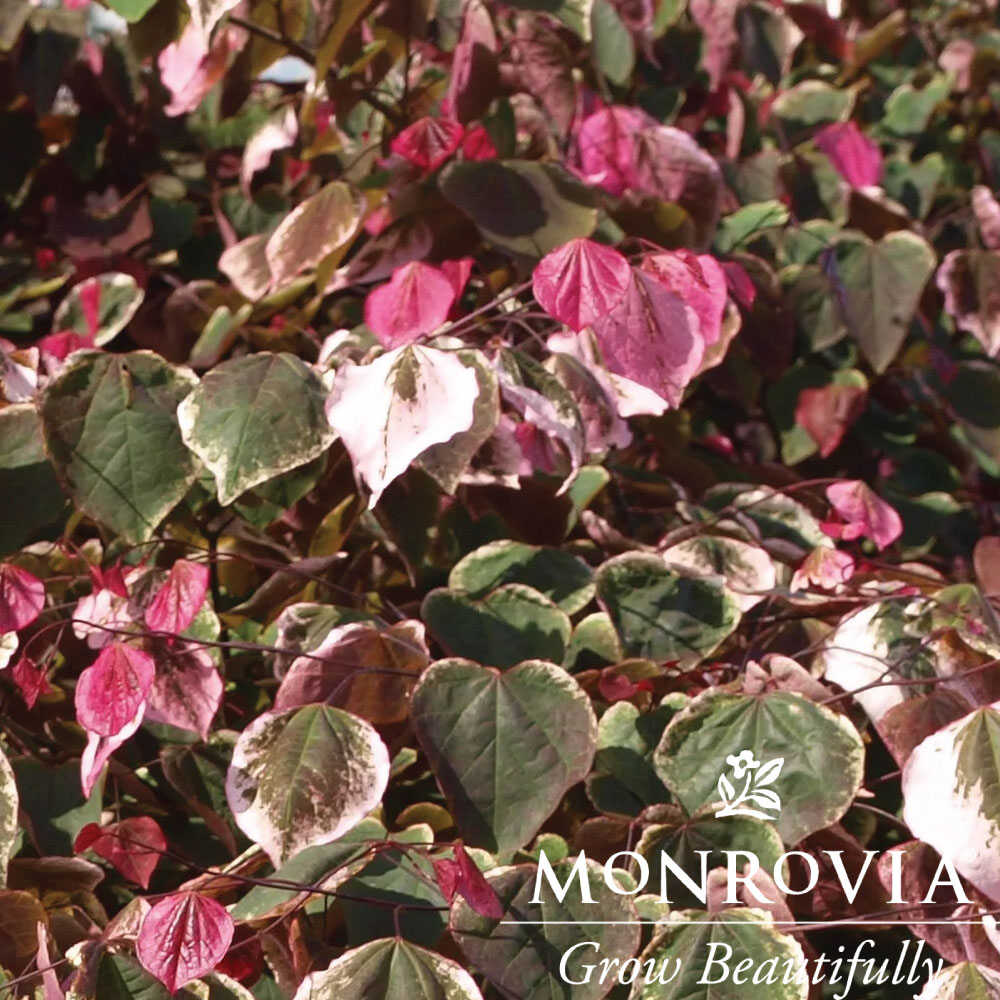
Cercis Canadensis Carolina SweetheartRedbud ‘Carolina Sweetheart’ (Cercis canadensis ‘Carolina Sweetheart’) is a distinctive ornamental tree admired for its vibrant variegated foliage and classic redbud flowers. In early spring, clusters of rosy pink blooms appear along bare branches, creating a soft yet striking floral display. As the season progresses, heart-shaped leaves emerge in shades of deep pink, creamy white, and fresh green, forming a dynamic color pattern that continues to evolve throughout the growing season. This unique foliage makes ‘Carolina Sweetheart’ a standout specimen tree and a perfect choice for adding color and texture to garden landscapes.
Growing 20–30 feet tall with a rounded canopy, this redbud thrives in full sun to partial shade and performs best in well-drained soil. It is well-suited for small to medium-sized gardens, mixed borders, and as a focal point in residential landscapes. In autumn, the foliage transitions to soft yellow tones, extending its seasonal interest. Low-maintenance and relatively pest-resistant, Redbud ‘Carolina Sweetheart’ combines showy spring blooms with bold, long-lasting foliage color, making it an excellent choice for gardeners seeking a colorful yet manageable ornamental tree.
Care Instructions:
Planting: Choose a site with full sun to partial shade and well-draining soil. Dig a hole twice as wide as the root ball and plant at the same depth as in the container. Space trees 15–25 feet apart.
Watering: Water regularly during the first growing season to establish roots. Once established, water deeply during extended dry periods. Avoid waterlogged soil.
Pruning: Minimal pruning required. Remove dead, damaged, or crossing branches in late winter or early spring. Light shaping can be done after flowering.
Pest Control: Generally pest-resistant. Occasionally monitor for leafhoppers, scale, or canker. Treat issues promptly with horticultural oil or fungicide if needed.
Soil Tips: Prefers slightly acidic to neutral, well-draining soil. Mulch around the base to retain moisture and protect roots from temperature extremes.