Spicebush
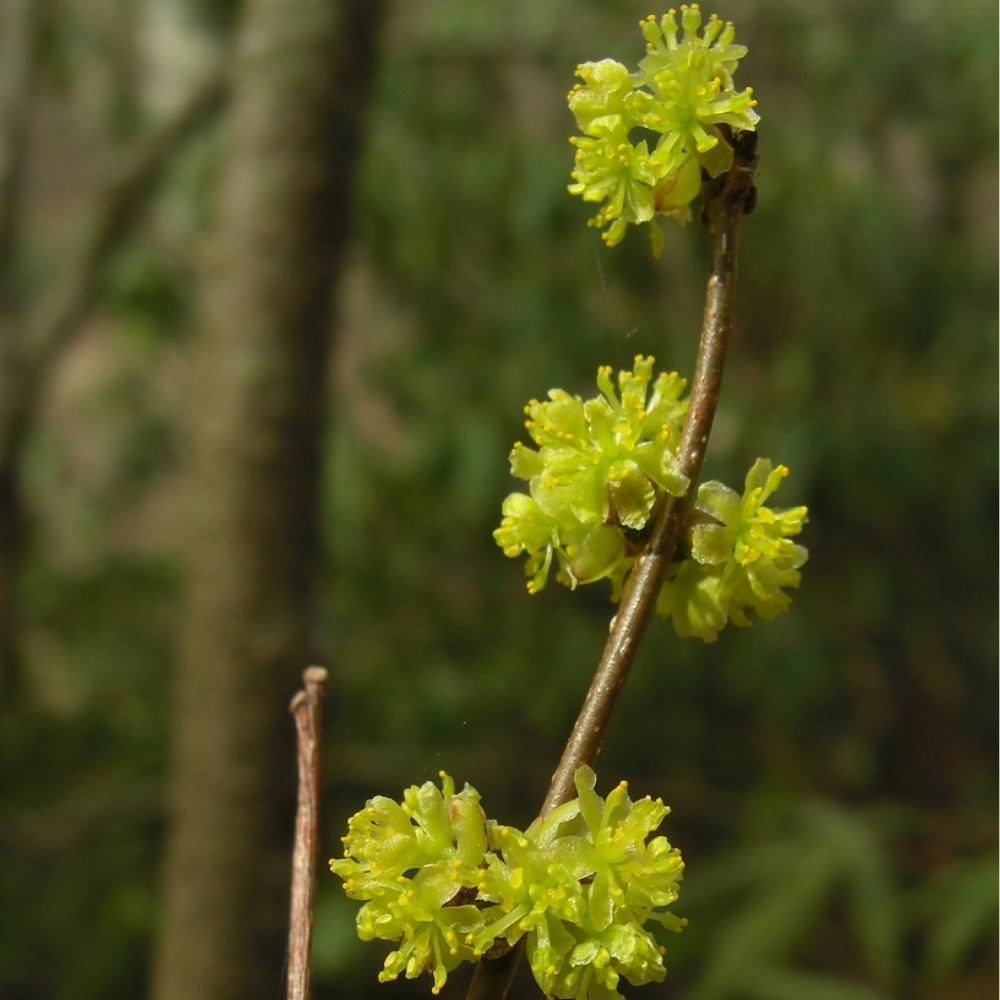
Lindera benzoinSpicebush (Lindera benzoin) is a versatile native shrub that brings multi-season interest to landscapes, especially in woodland and naturalized gardens. In early spring, before most plants leaf out, it produces clusters of small, soft yellow flowers along bare branches, creating a welcome splash of color. As the season progresses, fresh green leaves emerge, releasing a pleasant citrus-spice fragrance when crushed. In autumn, the foliage turns a bright golden yellow, extending its ornamental value well into fall.
Beyond its beauty, Spicebush plays an important ecological role. It is a host plant for the spicebush swallowtail butterfly, and female plants produce bright red berries that provide food for birds and other wildlife. With its rounded habit and tolerance for shade, it works well as an understory shrub beneath trees or along stream banks. While slow to establish, Spicebush is long-lived and low maintenance once settled, making it an excellent choice for native plantings and sustainable landscapes.
Care Instructions
Planting:
Plant in partial shade to full shade, preferably in a sheltered woodland setting. Space plants to allow for mature width.
Watering:
Keep soil consistently moist, especially during establishment. Mature plants tolerate brief dry periods but prefer regular moisture.
Pruning:
Prune lightly after flowering or in late winter to remove dead or crossing branches. Minimal shaping is needed.
Pest Control:
Generally pest and disease resistant. Monitor for minor issues, but treatment is rarely required.
Soil Tips:
Prefers rich, well-draining soil with high organic matter. Slightly acidic soil enhances growth and overall health.