Wild Ageratum
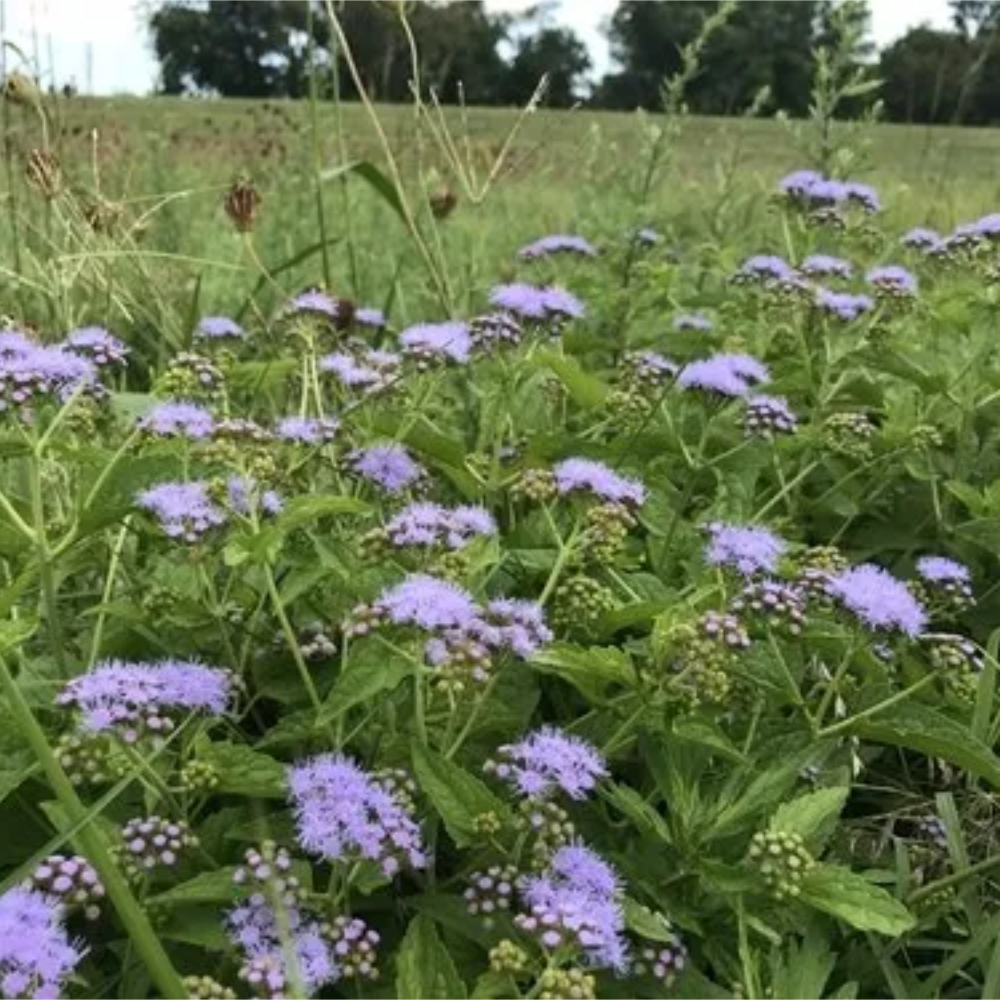
Conoclinium coelestinumWild Ageratum (Eupatorium coelestinum) is a striking perennial known for its unique clusters of fuzzy, vibrant purple flowers. Blooming from late summer into fall, it provides a long-lasting pop of color in the garden, while also attracting pollinators like bees, butterflies, and hummingbirds. The plant’s deep green, serrated leaves provide an attractive backdrop for its showy blooms, making it a great choice for adding visual interest and texture to garden beds, borders, or wildflower meadows.
Easy to grow and highly adaptable, Wild Ageratum thrives in both sunny and partially shaded areas. It’s a low-maintenance plant that tolerates a variety of soil types and conditions, including moist or dry environments once established. Its ability to attract beneficial insects and its extended bloom period make it a favorite for wildlife gardens or butterfly gardens.
Care Instructions
Planting:
Wild Ageratum grows best in well-draining, moist soil. Plant in a sunny or partially shaded area, spacing plants about 12–18 inches apart to allow for full growth.
Watering:
Water regularly, especially during dry periods. While it is somewhat drought-tolerant once established, Wild Ageratum prefers consistent moisture, particularly during its blooming season.
Pruning:
Deadhead spent flowers to encourage new blooms. In early spring, trim back the plant to about 4–6 inches to remove any winter-damaged growth and promote healthy new shoots.
Pest Control:
Wild Ageratum is relatively pest-resistant but can occasionally attract aphids or caterpillars. Use insecticidal soap or remove pests manually to control any infestations.
Soil Tips:
Prefers moist, well-drained soil, but is tolerant of a range of soil types, including clay and sandy soils. Adding organic matter to improve soil fertility and drainage can promote better growth and flowering.